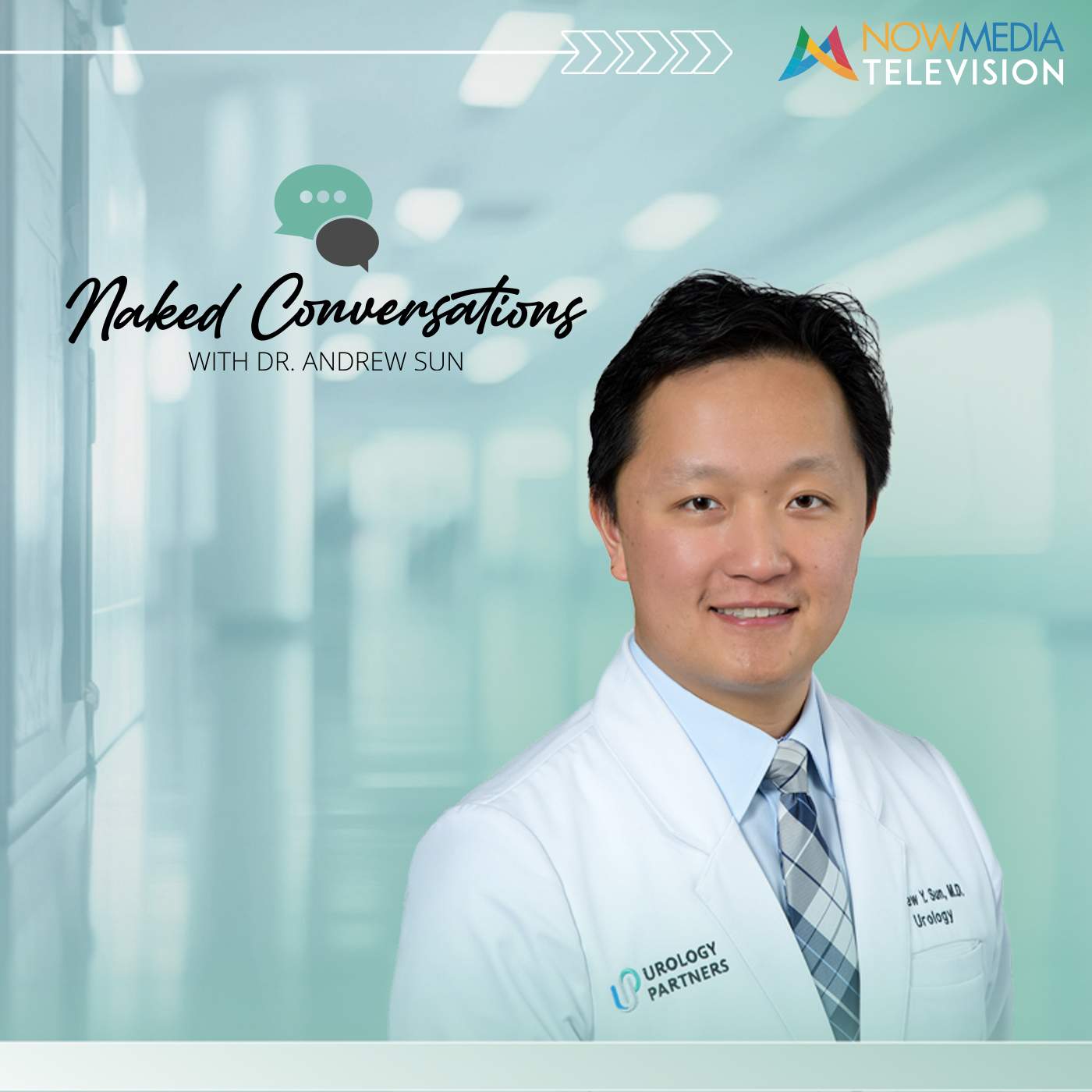
[00:00:00] Speaker A: I'm Dr. Andrew sun and on Naked Conversations we bring honesty back into the conversation. We talk about what's beneath the surface, the places where fear, meaning, emotion and identity intersect. Naked conversation, the Now Media Television.
Welcome to Naked Conversations with Dr. Sun where we talk about sexuality like it matters, because it does. I'm Dr. Andrew sun and tonight we're diving into a topic that's everywhere but rarely discussed. Honestly, what happens to intimacy when your body changes dramatically? My guest is Dr. Ron Ely, PhD, founder and CEO of Mexico Bariatric center and Mexico Cosmetic Center, a leader in Mexico medical tourism who's helped build care pathways for patients seeking bariatric surgery in Tijuana, Mexico. We're not here to romanticize weight loss or shame anyone's journey. We're here to talk about the real stuff. Confidence, relationships, sex, sex drive, identity, and what healing actually looks like after a life changing decision. Dr. Ely, thank you so much for joining us today. I'm looking forward to a fascinating discussion about bariatric surgery and outcomes.
[00:01:06] Speaker B: It's a pleasure. Thank you so much for having me.
[00:01:10] Speaker A: Absolutely. Could you start just by introducing us to yourself, the company you've built and what Mexico Bariatric center is all about?
[00:01:19] Speaker B: Great. So actually it's very interesting because I have an engineering background, actually I have a PhD in numerical modeling and I got introduced to medical tourism in Mexico in 2007.
And I saw an opportunity to apply my engineering background, my analytical mindset to help patients because of the obesity epidemic and the lack of access to bariatric surgery in US and Canada, to connect patients with the best options with surgeon and facilities down in Mexico.
[00:02:09] Speaker A: Very interesting. So you have patients from, I guess a lot of from the US but all over the world or Mexico as well.
[00:02:16] Speaker B: Yeah, we do have international footprint, to be honest with you. We have from most of our patients from us, but we have a big portion coming from Canada, from Europe, from New Zealand, Australia.
[00:02:31] Speaker A: Awesome. And what are kind of the main services that you provide?
[00:02:37] Speaker B: That's one of the advantages of the company because we have a wide spectrum of bariatric surgery and of course plastic surgery that we offer to patients. So it's a one stop shop. And that was one of my goals from the beginning. To collect and gather the most talented surgeons and best hospitals to be able to offer these services. That is so complete we can do pretty much any type of bariatric and plastic surgery.
[00:03:13] Speaker A: Well, interesting. One stop shopping is a great way to go for it. You know, could you like in a minute or two, just kind of Describe what makes your role as founder and CEO maybe a little bit different from a typical clinic owner or what part of that patient journey you really obsess the most about. Safety, experience, outcomes. All of the above.
[00:03:33] Speaker B: I think what actually for myself I have a passion for what I'm doing.
And since the beginning I wanted to treat patients like they're my own family.
And that's why I created an integrated closed loop system which I have control over every variable from what we do in US and what we do in Mexico. And I'm involved in all aspects of the company 247 and all the above you mentioned. Safety, experience, long term outcomes.
I mean these are all number one priority for me and the company and I happen to have the best people that work with me here in US and Mexico.
[00:04:28] Speaker A: Amazing. How many surgeons do you have in your group?
[00:04:32] Speaker B: Right now we have in the bariatric side we have six and in the plastic we have four.
Again, each surgeon has a certain skill or talent that we bring to the table.
That's why we can offer any type of surgery from endoscopic to laparoscopic, from low BMI, we can start pretty much at 28 BMI and we have no limit of where we stop. I mean we have done surgeries for BMI of 110 in our center.
We do all type of complex surgeries like bypass, mini bypass, duodenal switch, sati.
We offer all the leading edge procedures like sase.
You know, there is no limit of what we can do and we are on the top of the, the leading edge of the bariatric surgery.
[00:05:30] Speaker A: Amazing. Do you also do medical therapy or is it purely surgical? You know, the GLP1s have become super popular these days. I'm not sure what that looks like in terms of your practice and clinic.
[00:05:42] Speaker B: Well, GLP1 medications, as you know doctor is a huge advancement, but still is not a long term solution.
So we do actually get a lot of patients that have been on the GLP1 and they finally figure out that this is not a long term solution. They come to us and we do the surgery for them.
But you know, actually sometimes it could be combined with the weight loss surgery.
Sometimes we do that for high BMI patients who want to do a good job on the pre op diet, for example, to get prepared for the surgery.
And sometimes for patients who need a kind of a boost because they probably regain some of their weight and they need to get a restart on their tool, which is the bariatric surgery.
[00:06:39] Speaker A: Yes, absolutely. I have also noticed that in My practice as well. Certainly it's an adjunct, but. But there's a cap sometimes to what can be achieved with GLP1s. And I've actually found that that has actually opened the door to more patients seeking bariatric surgery because they use the two tools together. Out of curiosity, what would you say is the average size patient that you get, whether BMI or whatnot? You know, I'm sure there are some people out there that are thinking I might be too big or I might be not big enough. You know,
[00:07:10] Speaker B: right around 40 to 42 BMI. That's our average.
[00:07:15] Speaker A: Gotcha. Okay, great. You know, you started this, I believe, in 2012 and sort of a very large kind of patient base, both internationally, like you said. What kind of systems did you have to put in place to ensure that this was going to be top quality care with everything that comes with that.
[00:07:33] Speaker B: It's interesting because of my engineering background, the way I think, and software engineering background, I started building algorithms, for example, complex algorithms that we connect patients to the best surgeon they have. So let's say if you have six team of bariatric surgeons, surgical teams, when the patient come, based on the number of health questionnaires that we have processed over years, imagine we have had over 30,000 patients. So imagine how many health questionnaires we have processed.
We have developed complex algorithms to know from the time they submit their health questionnaire, health history, which surgical team is best for them.
That's how we start. We do have surgeon liaison in the mix that monitors every health questionnaire that goes to the surgeon and come back.
And also I built a software that connects the US to the Mexico side. Remember, this is not a simple. Just we're not like Blue Cross to just simply process paper. We taking patients, we giving them surgery and we bring them back.
So in order to do that, we need to have an integrated system that can connect all of our coordinators here to the coordinators down there to the doctors, to the hospital.
So that's what that software does, which connects everything in US and Mexico together.
[00:09:22] Speaker A: Very interesting. That's a very unique application of your PhD skill set to medicine. Care tends to be very discordant the way that is currently done. So I think that's brilliant. I definitely want to get more into that, but I kind of want to bring a broad question to you, which is we are a sexual medicine show talking about a lot of intimate ideas. Certainly that is a piece of the bariatric surgery puzzle that I'm sure a lot of patients may think of may not. What would you say? You know, a lot of patients I think perhaps presume that weight loss will automatically fix their intimacy, but their body undergoes a very dramatic transformation and sometimes their psychological state doesn't catch up quite as quickly. Do you see that or what do you think about that sort of change between those two states?
[00:10:08] Speaker B: Oh, we see that all the time. Like you mentioned, weight loss surgery does not automatically fix their intimacy is basically a body brain lag. Right.
So there is a delay between our self image and our changes in our physical appearance.
And it's normal. You have to practice, you have to work on it. We do recommend a lot of time for them to get to go through therapy, get a psychological help to match, synchronize what happens to them physically with all their other sexuality, their relationship with their partner.
[00:10:55] Speaker A: Yeah, absolutely. These are all fascinating topics that we'll get into during today's show. So we will stop there for now and let's get into the next part which I'm sure many of our viewers are curious about, which is safety standards, what medical tourism really means, what it looks like, the practical realities and how you've built such an excellent world class program. We'll be back right after the break.
Welcome back to naked conversations with Dr. Sun. Want more of what you're watching? Stay connected to this show and every NOW Media TV favorite live or on demand. Download the free Now Media TV app on Roku or iOS and unlock nonstop bilingual programming in both English and Spanish. Prefer podcasts? Catch the audio
[email protected].
we're back with Dr. Ron Ely, Ph.D. found founder and CEO of Mexico Bariatric Center. Dr. Eli has built his program around all inclusive support and he's also tied to the development of Hospital Azar which the organization describes as a modern cutting edge facility for bariatric and cosmetic surgery in Tijuana, Mexico. Now in this next section I want to talk about credibility and medical tourism because all patients and physicians want the same thing, which is great outcomes and happy patients.
Could you briefly just describe what medical tourism means to you and what all of our say US listeners would want to think about when considering travel to your facility?
[00:12:43] Speaker B: Yeah, so sometimes when we talk about medical tourism people think this is some back alley inferior surgery.
Whereas medical tourism is in general global, is a sophisticated multi billion dollar sector and growing especially in Tijuana. Tijuana becoming one of the top centers for pediatric and plastics because of the talent, because of the facilities and if you look at what CDC recommendation is, their recommendation is when you are going across the borders.
You need to get with the coordinating company.
And that's who we are. We are a coordinating company that arrange everything from A to Z for you, for peace of mind.
And you don't have to guess what you do when you're down there. How do you get to the hospital, how you get to the hotel, all that movement and look at, looking at credentials and experience, experience of the surgeons of the facilities. This is the, of course, the main research that patients need to do looking to who are the surgeons, what is their credentials and their experience.
Also what medical tourism offers often is like what we do is what we call all inclusive packages, which means everything from the time you arrive, from the time you leave is all included in the package.
And patients need to look to see who's behind the company.
Don't just look at some cute TikTok or social media ads or some AI generated images and look at what is the pre op, post op care look like, which is huge for success and the safety and hygiene of the facilities they go to.
So that's pretty much what patients need to know about how to get affordable, high quality service across the border.
[00:14:59] Speaker A: Gotcha. So you guys truly provide sort of all inclusive care from I guess getting on the plane till getting on the plane back home in essentially everything in between, transportation, hotel, everything like that.
[00:15:11] Speaker B: Well, we do not do the airline, so that side is on the. We do have some packages for groups that they come from other parts of the world. We call them a group, which we have a tour guide for them, which is one of our past patients. We provide everything.
But most of our patients come, come and the way it works is all they have to do is to come to San Diego.
We pick up everybody from the airport and from there everything is on us until they come back and they take the plane or to drive back home.
[00:15:48] Speaker A: Okay, that's very convenient. I'm sure that settles a lot of anxieties that people might have. Now you have two centers, bariatric and plastic surgery. And I guess it's one large center. I'm sure many of the bariatric surgeons, many of the bariatric patients eventually also require your plastic surgery services.
[00:16:07] Speaker B: Yes, that's very interesting because a lot of the patients who were probably touch base on that, they worry about loose skin. And if they, if they get loose skin, it's very simple, they come back and we do what we call mommy makeover and we could fix them like they were 20 years old again.
[00:16:29] Speaker A: Outstanding. And then can you tell me a little Bit about your hospital. I believe you've built a specialty purpose built, modern advanced hospital specifically for this purpose.
[00:16:40] Speaker B: Yes, Building the hospital has been one of my dreams for years. And finally in 2021, I had an opportunity to secure a spot and I happen to have the best architectural team and construction team behind me.
And we built this hospital for medical tourists specifically and specifically for minimally invasive procedures like bariatric and cosmetic surgeries.
And it has become a prototype because the way we built it is a hospital.
But it's not like a hospital that has walk in emergency or all the things that a hospital has. It's focused on the patients who come there and they stay in the hospital and they recover and they go back home.
And especially of course, the equipment, the staffing, everything is specialized for this type of surgery. As the statistics show it, if a center, if the surgeon is specialized in one area, the complication rates are much lower and the success rate is much higher. Our surgeons are doing this dedicated bariatric surgery, plastic surgery, every single day.
They don't do one type of surgery one day and one type of surgery another day. It's specifically bariatric and plastics. And I made the hospital to feel like a home. Home away from home is not looking like a hospital. And that's why patients love the experience of being there.
[00:18:24] Speaker A: Yeah, sounds amazing. You clearly have built a world class program. You know when patients are researching things online, what would be some of the biggest red flags, flags you would tell them to watch out for if they're seeing something online or it almost seems too good to be true or I don't know, what do you think?
[00:18:43] Speaker B: I think that our brand Mexico Bariatric center and Mexico Cosmetic center is one of the well known brands around the world. But still, patients that they're kind of new, they're trying to do the research.
If they hear like, oh yeah, Mexico offers good options, inexpensive options and good quality, the first thing I would suggest is look and do your research.
Look, make sure who's behind the company, the ads, make sure these are not deceptive. Social media marketing, there is somebody behind it. There is this. The pictures are not AI created and don't do price shopping because it's your health, it's your future. This is a life changing opportunity that people get second chance in life. And the prices that we offer around starting at $4,000 is amazingly low. So.
But looking to the quality of the center, quality of the surgeons and experience,
[00:19:56] Speaker A: yeah, that's, that's impressive pricing. And I fully agree as a surgeon Myself, you know, you don't want to be going for the bargain basement, cheapest price. When it comes to something this important as your own body, you want quality. And it sounds like you offer very affordable quality, which is. Which is fantastic. Can you. Someone that's never had medical tourism experience myself, can you describe to me, like, what a patient journey looks like, you know, from the moment that they look up your website and decide to contact you? How does that go from there?
[00:20:27] Speaker B: Yeah, you know, the experience.
I understand that patients can have anxiety because they're going out of their town, they're going to get this procedure, which is changes in their anatomy. Anatomy. So there's a lot of anxiety. And we always tell patients, you are okay to have anxiety, but don't be too anxious because of the outcome. If you're too anxious, the outcome is not going to be favorable.
So basically, we have made this process very simple. Is like 1, 2, 3. They do the health questionnaire online, which we have developed over years. What to ask?
In a way, we are like the leading industry for telehealth, which started mostly after Covid. Right. So we take their information, we run it through our complex algorithms, like I mentioned, and we give it to the best surgeon for them.
And then our surgeon liaison, our surgeon review this.
If 97 of the time we have, you know, reapprove them, which is huge because of the type of surgeons we have. We have a really high approval rate.
So we get their health questionnaire, we approve them, and they get a message back, hey, your health questionnaire is approved. This is the type of surgery we recommend for you.
And at that point they can contact our coordinators, which is us based in, like I mentioned, in Sacramento. That's where Rhea I am right now.
And basically they get on the calendar by putting a deposit. They can actually do this on their own. They don't need anybody to do that for them. Put the deposit and secure a spot on our calendar.
After that, all they have to do is finish their paper work, get their documents in, whether they fly or drive, arrange for their transportation and show up in San Diego International Airport. That's all they have to do. From there, everything is planned out. They don't have to worry about a thing.
The minute they land, we pick them up from the airport, we take them to our facilities, we do everything like bang, bang, bang, and we bring them back and they fly back home.
[00:22:58] Speaker A: How long is the average sort of journey? The hospital stay is there another few days locally or how does that work?
[00:23:09] Speaker B: Our package usually starts from one to two nights in the hospital.
But after the two days, remember the, this is a laparoscopic surgery and they're good to go back home. Of course there are some patients that they like to probably hang around in Tijuana more or stay in the San Diego side before they travel back home. But that's pretty much is a three night package.
[00:23:36] Speaker A: Okay, got it. And then how about aftercare? I'm sure there'll be patients that say, hey, what happens after I go home? Are there telemedicine visits? Do we check in? What if there are some issues? How does that look like?
[00:23:49] Speaker B: Well, the surgery itself requires very minimum aftercare.
We do recommend that they check with their physician, general physician, in three months after, just to check their vitamin level and things like that.
But we do have so many ways that we support them.
One of the huge parts of the company is the Facebook group and social media groups. We have, we have a main group that is of course these are all private groups that has over 13,000 patients actively messaging each other, asking questions and sharing their information. Because before, after picture, and this is the kind of support you need for long term success.
We do have groups for men's only, for certain countries only.
But beside that, we do have a nutritionist that they check with them. We do have nutritionists go live every other week.
We have our surgery liaison.
We have so many ways they can reach out to us after or before surgery to get the support they need.
[00:25:08] Speaker A: Amazing that 13,000 patients, that's a tremendous case experience.
I'm sure there'll be lots of things that'll be interesting to learn from those patient experience which we'll get into next. So next up, bariatric surgery changes hormones, metabolism, energy and sometimes sexual function as well. So we'll connect the medical reality to the bedroom reality and listen to what some of the patient experience has been.
Welcome back. If you're watching and thinking, okay, weight loss, but what about libido, erections, orgasm and self confidence psychologically? Well then you're not alone. Weight loss can improve health markers, but sexual function is a full body and full mind story as well. Hormones change, blood flow, sleep stress, medications and relationship dynamics. We'll get into some of that next as we talk more about some of the of the outcomes from dramatic weight loss surgery. Doctor, good to be with you.
Thank you so much on your 13,000 patient experience. I'm sure some of them have commented on some of the emotional, psychological and sexual changes that have happened to them after the surgery. Could you briefly kind of comment on that? Whole domain of the patient experience.
[00:26:41] Speaker B: From what we see, there is an difference between men and women when it comes to post op changes in their sexuality, their relationship and things like that.
What we see mostly in women is like they are worried about loose skin, for example.
In general, all the patients get huge boost for their confidence and there's self esteem, that's huge.
And in men we see a lot of increase in testosterone and sexual function activities.
[00:27:33] Speaker A: Yeah, as a hormone specialist in a testosterone, testosterone specialist, I, I see this all the time. You know, one of the most, the, the most common causes of low testosterone are obesity and poor sleep, which oftentimes goes with obesity. And during the sort of weight loss journey, it's a dramatic improvement in their testosterone levels. Sometimes we'll actually even give men testosterone therapy as a part of their weight loss journey to help them keep their muscle metabolism up and, and things like that. And there's of course a, a huge psychological change like you talked about. Out of curiosity, what's the relatively, you think the timeframe between the bariatric surgery and when the patients might kind of come back for their plastic surgery?
[00:28:15] Speaker B: Well, we do Recommend at least 1 and a half years so they can get to stable weight.
And so when we do the plastics, it's like a one time deal and they don't have to do any more revisions or anything like that. So one and a half years is ideal.
[00:28:35] Speaker A: Gotcha. Yeah. Okay. Perfect. Psychologically, how do you prepare patients for the sort of, let's call it, identity whiplash that suddenly happens because they've, they've probably been large for a while. It's almost become part of their sense of self and then this dramatic change happens. So they might look very different, but they still might feel like an older version of themselves.
[00:28:57] Speaker B: Yeah, we hear that often that they say we don't relate to the, to the person we see in the mirror anymore. And we talked about body brain lag and body dysmorphia. You know, it takes time for their self, self image and physical appearance to match. And it needs work in people within the relationship.
It's best to get their partners on board and also do as much reading and research about what changes they're going to go through. And one of the advantages or the success stories that we have is coming not only because of the expertise we have.
Our patients are more educated when they come to us.
They know about the surgery, they know what the outcome is. We try to educate them too.
That's huge. Education before surgery is huge.
We do have webinars Every month that we get online with our surgeons and explain what to expect, what's the complication rate, what is the success rate, what to expect.
And the more they know, the easier, the more successful surgery is. And in the relationship, in their self image, all that is going to help by knowing what to expect.
[00:30:38] Speaker A: Definitely. Definitely. Do you find that patients often have a need for or seek any type of psychological or psychiatrical assistance in this transition?
[00:30:49] Speaker B: Honestly, I think it's a great idea. And, you know, for the couples, getting your partner on board is huge.
And because the changes happen so fast, you lose weight pretty much the first year, one and a half years, you get to your ideal or goal weight.
So this is. Everything is happening so fast, and you need to have your partner on board and communicate. Communication is huge.
To tell them about these changes and get them to explore with you what are the changes you've gone through.
And of course, we do have couples that they do this together, which is huge. When you do this journey together, you help each other.
You know what phases each one is going through. So that's a huge help. But also our groups are huge parts of the success because it's private and they can voice, they can say what they're experiencing and share that with others and get feedback.
[00:32:04] Speaker A: Yes. Group support and couple support, certainly. Do you find most of the partners will also travel with them to the surgery and stay with them during that time, or do people come alone?
[00:32:15] Speaker B: No, we do have at least, I would say about 30 to 40% of patients come with their companion, not necessarily their partner, but they do come with companion.
[00:32:27] Speaker A: Gotcha. Gotcha.
[00:32:29] Speaker B: Awesome.
[00:32:29] Speaker A: And so through this dramatic shift, I think a lot of people assume that when they lose this weight, they'll feel only positive things. But have you ever seen or people in the groups report some struggle with the opposite, you know, where the relationship actually changes in a negative way, at least for the. For a certain amount of time until they kind of come to terms with thing. I think there was a. There's a popular podcast called the Daily by the New York Times. And I think a month ago there was like an episode about this couple that the wife took GLP1 agonist and lost a dramatic amount of weight. And it actually like changed the way that the couple's relationship worked because it. It used to be such a piece of their relationship, I guess was like her size. Have you ever seen that happen?
[00:33:14] Speaker B: Yes, we do see that too.
And a lot of it is communication.
And if you run into problems, we do recommend you go to therapy.
It's basically it's like for women, they're very sensitive, you know, they think like, well, I have loose skin now and maybe my partner doesn't like that. Or the, or the partner may think that they're doing this maybe to find someone else in their life. These are all like mind trying to read each other's mind instead of communicating.
And it's best we see this often that patients really do this for themselves.
It's for their well being to be better, have a better quality in their life.
But the partner may not see it the same way. And again, this is all miscommunication. Right. If you.
And like I said, you need to communicate with your partner for all the changes that. Which is very happening very rapidly to get them on board.
[00:34:33] Speaker A: So yeah, I think there's some population associative data that shows that oftentimes couples weights go up and down together. Right. Probably because of living together and habits. Do you ever have couples kind of come in for the surgery together at the same time?
[00:34:50] Speaker B: Yes, that's what I was saying.
When they come together, together is huge because they know, they support each other and they know what changes they go through. But it's funny, do you mention that even sometimes we see patients who go through the surgery, their partner also lose weight? Yeah. When you mentioned the couples go up and down, they also lose weight even though they didn't have surgery.
[00:35:16] Speaker A: Yeah. Yeah. It is very interesting. I'm sure there's psychology and shared intake. And when you're not eating as much, your partner also doesn't. It's very interesting. Fascinating. All right, and what, what percentage of patients do you think after dramatic weight loss surgery, desire or return for cosmetic plastic surgery for that loose skin aspect, is it most.
[00:35:41] Speaker B: Well, not everyone gets to a point that they need surgery, injury either.
It depends on their race, their skin elasticity, how fast they lose weight, also if they exercise, how old they are. So there is. There's all different type of patients and I would say about 20% that they come back for for skin removal. Yeah.
[00:36:11] Speaker A: Interesting.
Yeah, yeah, for sure. Now the doctor in me has a few questions which is, does the presence or absence of diabetes or smoking affect your decision making in terms of performance of the surgery or outcomes?
[00:36:26] Speaker B: Well, we do recommend that they stop smoking and that's one huge problem because they have a hard time doing that before and after. It really helps the surgery and the outcome.
[00:36:39] Speaker A: Yeah.
[00:36:40] Speaker B: And. But the diabetes. No, I mean this is the tool to lower your A1C.
[00:36:48] Speaker A: Sure. Yes. And it helps. Yes. I remember from my medical training, although I don't perform bariatric surgery, that the smoking was the big thing about wound healing, I think, and outcomes, it's a very, very predictive factor. Right?
[00:37:03] Speaker B: Yeah. We want them at least to stop four weeks before the surgery. But again, sometimes they may not.
[00:37:12] Speaker A: Easier said than done, right?
[00:37:13] Speaker B: Yes. Easier said than done.
[00:37:14] Speaker A: Yes. Certainly, certainly. All right, Fantastic. Very good information if folks want to find you. What's the easiest way to look you guys up or get your information?
[00:37:24] Speaker B: Well, our main website is Mexico bariatrics center.com and mexicocosmeticscenter.com and the phone number to reach us is 855-768-7247.
And that's we work pretty much from 7am to 5pm Pacific Standard Time. Like I said, our office is in Sacramento, California.
And you can look us online or call us and we'll be more than happy to get the information you need.
[00:38:02] Speaker A: All right, excellent. So coming up next in our final segment, we'll talk about the long game aftercare, mental health and sustainability and why success isn't just on the scale. It's about the life that you can live afterwards.
Welcome back to naked conversations with Dr. Sun. Don't miss a second of this show or any NOW Media TV favorites. Streaming live and on demand whenever you want. Grab the Free Now Media TV app on Roku or iOS or for instant access to our bilingual lineup, prefer podcasts. Listen
[email protected].
so we're back with Dr. Ron Ellie, PhD. And now we're going to talk about what most people underestimate, which is the after the follow up, some of the mindset shifts, the emotional health, the relationships and the lifetime aftercare that goes into a surgery like this.
Although right before I get into that, I have one question again from the surgeon's perspective, which is can you tell me if about your surgeons, sort of their, their training, their expertise? It sounds like you have an awesome lineup of highly skilled doctors providing this very specialized surgery.
[00:39:27] Speaker B: Yeah, the, the average about 5,000 surgeries behind, behind them each one, some of them have as much as 6,500 surgeries behind them.
And we have come a long way from the time we start the company to the to now we have come so far and the type of complex surgeries we can offer is off the chart.
And these are all young surgeons.
They are not just a name that they just, we just sign up the patient and some assistant surgeon do the surgery. They do every surgery. They themselves their skill and experience.
We do limit their Surgery per day. And that's one of the advantages of having that software I was mentioning earlier to be able to load balance the surgeons. We don't exhaust them by giving them so many surgeries one day and then not having something the next day. So they have this even load of surgeries every day which they practice.
And this is the thing you want your surgeon in the surgery room. Right. That's how they get better.
And this is, this is the type of skill set we have.
[00:40:48] Speaker A: That's a great. I wish I had that software. I did. I did seven surgeries on Tuesday and it gets to you for sure by the end of the day. Very interesting. Fascinating sort of expertise and especially in this type of surgery. Now I'm sure there will be patients that are thinking this is going to be some like 2 foot long incision down the middle of their body. But this is laparoscopic surgery, correct?
[00:41:09] Speaker B: Yes. Most of the surgeons that get away with less than 1cm incisions for sleeve and we do offer for lower BMI, what we call a single incision which we go through the belly button. So there was, there will be no scars. And those are really recommended. Recommended for patients under 40 BMI.
[00:41:30] Speaker A: Gotcha, gotcha. Very interesting. Can you talk about the differences between laparoscopic and robotic surgery? I'm sure there will be patients in the US that hear about robotic surgery. But I mean, I can vouch for this too. As a surgeon. The surgery is the same regardless of the instrument that you're using on. But if you could just describe that
[00:41:49] Speaker B: as you know, Dr. Sun DaVinci is the best robotic surgery tool right now.
But it's mainly used for other surgeries mostly like maybe gynecology and things like that.
We don't see advantage of using DaVinci or any robotics right now because again, our surgeons are young, they have experience, they have a feel for what to expect expect when they do the surgery and how to deal with different scenarios.
And I think their expertise probably is maybe is better than just robotics because of they know what they're doing when they get into this stomach.
[00:42:37] Speaker A: Yeah, yeah, absolutely.
I'm a urologist and so we heavily use the robotic platform for patients pelvis surgeries. Deep in the pelvis, it's a very tight space and it's hard to access. And that's where the robotics can help really. They help the surgeon because it's easier, but certainly upper in the stomach. In fact, one of the funny jokes that we talk about is that a lot of people in my generation here we only know how to do robotic surgery, but it takes more skill to know how to do laparoscopic surgery because it's actually a more expert level thing. And, and that's actually very fascinating. So very cool to see. So shifting gears just a little bit to sort of aftercare and long term support, what kind of area your program really sort of advocates for long term lifetime support. What does that mean to you? How do you set that up? What kind of resources are available to patients?
[00:43:28] Speaker B: Like we mentioned, the Facebook support group, the social media support groups are huge.
We have different support groups for different patients. The main one which we call the main support group is over 13,000 people are past patients. It's all private.
We do have one we call inside which these are for patients who are on the fence. They don't know if this is a right procedure for the them or this is the right choice for them.
We have them joined to that group. That's about few thousand patients there again there's groups for men's and also all the programs we have, including nutritional program which we do have webinars every other week they can jump and ask questions especially right after the surgery. The, the four weeks after surgery is huge because they have to go in four weeks from clear liquid to solid.
And the better job they do on the pre op diet and the post op diet translates into success, long term success. We do have a multivitamin program actually is our own brand called Emerge that we highly recommend the patients because it has a specific ingredient you need for post bariatric surgery to have long term success because we all lose weight, but to sustain it and to make sure down the line in 7, 8, 10 years you won't have any problem with your bone density, you won't have any problem with your nervous system.
So these are the things we work with patients to not only lose weight, but be successful long term.
[00:45:22] Speaker A: Yeah. After aftercare. Nutrition is definitely a thing I remember from my early rounds. In general surgery there are some specific nutritional like shakes that people would recommend sometimes afterwards to make sure that everything is being met. That's kind of what you're describing, right?
[00:45:39] Speaker B: Yes. We do have a line which we call Emerge Bariatrics.
Emerge basically comes in different forms of chewables, drinkable capsules so they can try different kinds to see what really works for them best. But basically those are made based on ASMBS standards.
So they give them exactly the ingredients they need. Because the postparistric patients are different. Right. We were talking about how postpariat Bariatric patient are different even for performing plastic surgery.
Once you do the surgery, you have certain requirements your body needs and that's what we recommend to do. At least for sleeve surgery at least two years and bypass five and do dental switch pretty much lifetime.
[00:46:32] Speaker A: Yeah, gotcha, gotcha, gotcha. On the plastic surgery note, I mean clearly you do mommy makeovers like you discussed and tummy tucks and whatnot. Do you also do other forms of elective plastic surgery, breast augmentation, facial surgery, things like that?
[00:46:48] Speaker B: Yes.
Our most popular surgeries are mommy makeover, which is a catch all phrase for multiple procedures in one operation and facelift.
And we do a really good job because our surgeons are so skilled that they can keep the surgery time under 5, 6 hours, but we can still do so much within that five, six hours. We usually get tummy tuck or breast lift and maybe BBL in one procedure.
Sometimes maybe we can even do arm lift with it. But we usually try to keep it under a certain amount of hours, which one of the standards we have for postpadiatric patients.
[00:47:35] Speaker A: Gotcha. It's very, very all encompassing. You know, as a sort of a metabolic hormone type doctor, some of the things that I see when patients lose weight, besides like massive increases in testosterone in men is also restoration of fertility. Significant obesity is definitely a negative impact on male sperm production and certainly with things like PCOS on female fertility as well. Just another big thing that we will often see in that sense from a metabolic standpoint, from a mobility standpoint, relationships, self image. What does success look like to you beyond just the numerical weight loss, what does that perfect success look like to you?
[00:48:17] Speaker B: Like you mentioned, everybody pretty much lose weight, metabolic health like diabetes, high blood pressure, joint problems, self respect, confidence.
But we also see we should talk about quality of life, right?
Live life the fullest.
And we see average of 10 years added to patient's life.
And also the NSVs, which we call non scale victory. For example, being able to sit in the plane seat without belt extender or fit in the seat, or be able to run with your kids, be able to do horseback riding. So many little things that you can enjoy now that wouldn't be able to enjoy before.
And one thing I wanted to mention when you mentioned about pregnancy and fertility, that's one of the things we recommend highly. We try to tell patients be careful, we don't want because after surgery they get pregnant so much easier and we don't want them to get pregnant at least one to one and a half years post op. Sure, that's something we really need to emphasize because the body is still changing and the minerals and the supplements is not there. So they would suffer. The baby is going to suffer. So we want them to be very careful with this for at least one and a half years. But we see that often because they get pregnant so much easier. Easier after surgery.
[00:50:00] Speaker A: Yeah, yeah. Very good point. Very interesting, fascinating discussion. Thank you so much. I certainly can think of quite a few patients that I'm going to send to your website. How is the best way for patients to look you guys up and reach you again?
[00:50:13] Speaker B: Our brand name Mexico Bariatric center is well known. All you have to go to mexicobariatric center.com and for plastic and cosmetic to Mexico cosmetic of course. Hospitalazar.commx has its own website and you can always reach us from 7am to 5pm Pacific Standard Time, 855-768-7247.
[00:50:43] Speaker A: Alright, thank you very much. Tonight's takeaway is simple. Changing your body doesn't automatically heal your story, but it can give you a powerful second chapter. If you're considering bariatric surgery, ask real questions and seek professional care. If you're already post op, you're not behind it. If intimacy still feels complicated but there's so much support out there for you, that's normal and that's human. Thank you to Dr. Ron Ely, Ph.D. of Mexico Bariatric center for an honest conversation that respects both the medical journey and the emotional one. I'm Dr. Andrew sun and this is Naked Conversations.
Keep it honest, keep it real.